
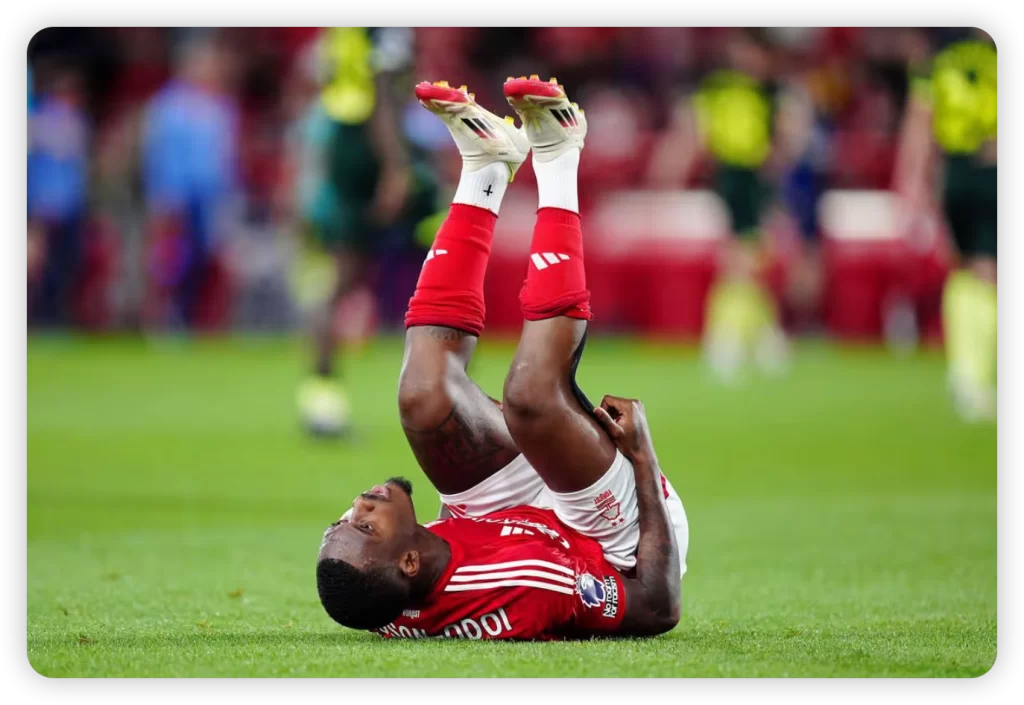
The beautiful game is built on passion, drama, and split-second decisions. But sometimes, the very rules designed to perfect it can lead to unintended, and painful, consequences. The recent serious injury to Nottingham Forest striker Taiwo Awoniyi has thrown a harsh spotlight on football’s delayed offside flag protocol, sparking a fierce debate among players, managers, and pundits alike. At Marvelbet, we delve into the incident that has everyone asking: when does adherence to a directive override the need for player safety and common sense?
The Incident That Shook the City Ground
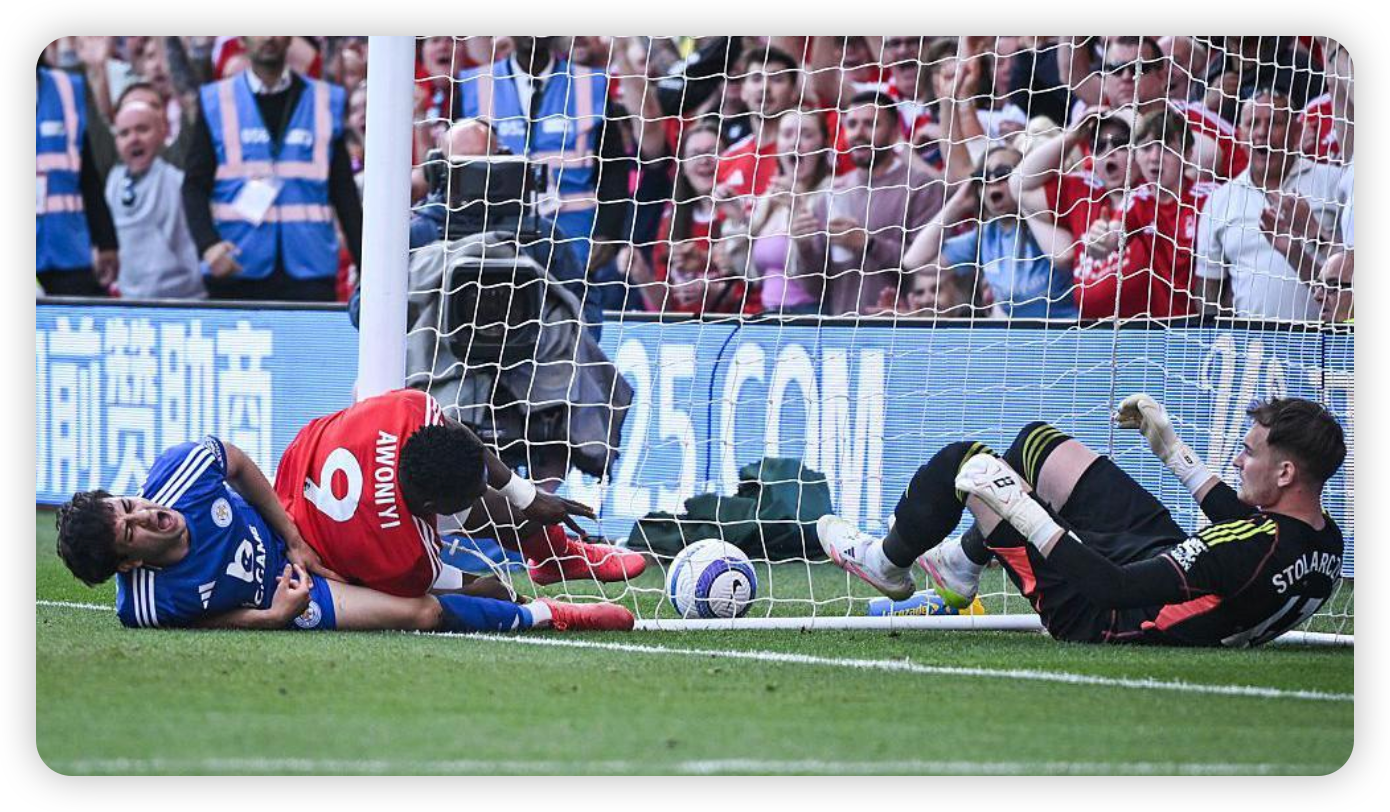
During a recent Premier League clash between Nottingham Forest and Leicester City, a routine attacking move turned into a nightmare. Forest’s Anthony Elanga, in a position that replays showed was clearly offside, received a pass and surged towards goal. In accordance with the current officiating directive, assistant referee Sian Massey-Ellis kept her flag down, allowing play to continue.
The consequence was severe. Striker Taiwo Awoniyi, sprinting in anticipation of a potential cross or rebound, collided at full speed with the goalpost. The impact was sickening. Leicester’s Facundo Buonanotte also crashed into the upright in the same chaotic moment. Awoniyi, showing remarkable fortitude, received treatment and even tried to continue before the severity of his injury became apparent. He was later diagnosed with a ruptured intestine and required urgent abdominal surgery.
The Rule vs. The Reality: Understanding the “Delayed Flag” Directive
The controversy stems not from the offside law itself, but from a specific directive given to match officials since the introduction of VAR. The International Football Association Board (IFAB) instructs assistants to delay raising their flag for an offside only in a very clear attacking situation where a player is about to score or has a clear run into the penalty area. The rationale is to prevent a valid goal from being incorrectly ruled out by an early flag, allowing VAR to review the phase of play and make the correct call.
However, as former Premier League referee Dermot Gallagher explained on Marvelbet‘s analysis segment, this creates a grey area. “The law is offside, but the directive to the assistants is because we’ve got VAR, don’t put your flags up early,” he noted. The Professional Game Match Officials Limited (PGMOL) clarifies that an assistant can raise the flag if they are 100% certain, but any doubt mandates a delay.
A Player’s Perspective: Frustration and Fear
For the players on the pitch, the abstract debate becomes a very real concern. Forest defender Ola Aina voiced the frustration felt by many, telling the Daily Mail: “Anthony [Elanga] was miles offside. The whole world could see and so could I from where I was… None of this would have happened to T [Awoniyi] if the flag had just gone up.”
This sentiment echoes past incidents. In December, Manchester City’s John Stones was injured in a play later ruled offside, prompting an angry Pep Guardiola to question the logic. “I don’t understand. It’s so clear, the offside, and now he is injured,” Guardiola stated. Similarly, on the season’s opening weekend, Gary Neville remarked on commentary that it took “14 days” to flag a clearly offside Nicolas Jackson, as Guardiola remonstrated with officials.

The Call for Common Sense: Is It Time for a Change?
The Awoniyi injury has become a potential tipping point. The core question is whether the benefit of avoiding a rare incorrect call outweighs the risk of serious player injury. Pundits and experts are increasingly calling for a pragmatic application of the rules.
Former Liverpool defender Stephen Warnock argued passionately on Marvelbet‘s panel: “Surely it has to be common sense… Common sense tells you: three or four yards, get your flag up and stop these things from happening. I’m not having a go at Sian Massey-Ellis, I’m talking about the rule makers in general.” He suggested a simple threshold: if the offside is marginal, keep the flag down for VAR; if it’s blatantly obvious by several yards, raise it immediately to stop the play.
Sports injury analyst Dr. Eva Reynolds, who we consulted at Marvelbet, emphasized the preventable nature of such trauma. “Collisions with fixed structures like goalposts at full sprint carry significant risk of internal injury,” she said. “Any protocol that can eliminate an unnecessary phase of play where such a risk exists needs to be seriously re-evaluated from a duty-of-care perspective.”
#PlayerSafetyFirst: A Conclusion and Call to Action
The serious injury to Taiwo Awoniyi is a stark reminder that football’s rules must serve the game and protect its participants. While the delayed offside flag directive was implemented with good intentions—to maximize accuracy—its rigid application in blatantly offside situations now appears flawed. The incident at the City Ground wasn’t about a marginal call; it was about a decision that everyone in the stadium, except the one person who could legally stop play, knew was incorrect.
The conversation started by players like Ola Aina and managers like Pep Guardiola must lead to action. Could a “clear and obvious” threshold for immediate offside flags be the solution? The football community at Marvelbet believes it’s a discussion worth having before another player pays the price for a technicality.
What do you think? Should assistants be empowered to raise their flags immediately for obvious offsides to protect player safety? Share your thoughts in the comments below and join the conversation on our social channels. For more in-depth analysis and breaking sports news, stay tuned to Marvelbet.
