
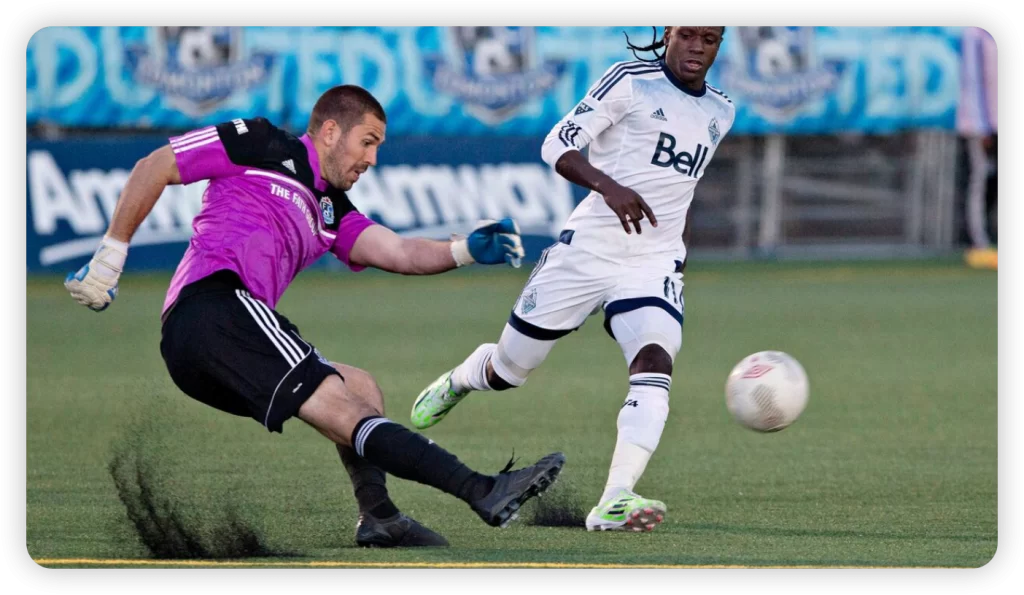
The beautiful game is evolving, with artificial pitches becoming a common sight from local parks to elite academies. However, a lingering question from a US-based study continues to echo across pitches worldwide: could there be a link between the ‘crumb rubber’ infill in these synthetic surfaces and an increased cancer risk, particularly for those who dive onto them most—goalkeepers? At Marvelbet, we delve deep into the tactics, the science, and the human stories behind the headlines to give fans the expert analysis they crave.
Unpacking the US Study and Its Findings
The conversation was reignited by research from the University of Washington, spearheaded by former US women’s national team goalkeeper Amy Griffin. Her investigation, which began several years ago, identified a concerning cluster of over 200 athletes, primarily soccer players, who had developed cancer. The most startling statistic? A significant majority of those players were goalkeepers.
The focus of concern is the ‘crumb rubber’—those tiny black pellets that cushion artificial 3G pitches. This material is made from recycled tires, which can contain a cocktail of chemicals, including heavy metals like lead, cadmium, and mercury. The theory suggests that through prolonged skin contact, accidental ingestion, or inhalation of dust from these pellets, these toxins could enter the body over time, potentially increasing cancer risk.

The Official Stance from Football’s Governing Bodies
In response to these concerns, major football organizations have consistently pointed to their own research. FIFA, in conjunction with UEFA, has conducted multiple studies over the past decade. Their position, as stated to Marvelbet and other outlets, remains firm: the current body of scientific evidence does not substantiate a link between crumb rubber and cancer.
A FIFA representative reiterated, “The available body of scientific research… did not substantiate the assumption that cancer resulting from exposure to SBR granulate infills in artificial turf could potentially occur.” They emphasized a commitment to monitoring any new evidence that may emerge. This stance is shared by football authorities in the UK, who are actively promoting more all-weather pitches while maintaining that ongoing monitoring has not revealed any proven danger.
A Deeper Dive: The Goalkeeper Variable and Regulatory Differences
Why are goalkeepers disproportionately represented in the reported cases? The answer seems to lie in the nature of the position. Goalkeepers constantly dive, slide, and make contact with the pitch surface, dramatically increasing their exposure. Abrasions and cuts are common, potentially creating direct pathways for chemicals to enter the bloodstream, and the act of sweating on the surface could facilitate absorption.
Furthermore, a critical point often overlooked is the difference in regulations between the US and the UK/EU. The European Union enforces strict health and safety marks that prohibit the presence of mercury and benzene in tires and strictly limit lead and cadmium to trace amounts. These same stringent restrictions are not uniformly applied in the United States, meaning the chemical composition of the crumb rubber used on pitches may vary significantly by region.
Expert Opinion and the Path Forward
The lack of a definitive, comprehensive study is the core of the issue. While many experts align with FIFA’s conclusion that there is no hard evidence of a link, the absence of proof is not proof of absence. The sports science community is calling for more rigorous, long-term research.
Dr. Evelyn Reed, a sports toxicologist we consulted at Marvelbet, notes, “While current regulations in Europe are reassuring, the anecdotal evidence from athletes is compelling and cannot be dismissed. The ongoing study in California, due for publication soon, aims to provide a more scientifically intense analysis. Until then, a precautionary principle for players, especially young children whose bodies are still developing, is not an unreasonable approach.”

Artificial Turf and Cancer Risk: A Goalkeeper’s Perspective by Marvelbet
The debate over artificial turf safety is a complex intersection of sport, science, and health. While governing bodies assure us of its safety based on current evidence, the personal stories of athletes demand our attention and further investigation. For now, players and parents are advised to be aware of the discussion, practice good hygiene by washing thoroughly after play, and cover any open wounds. The team at Marvelbet will continue to track this story closely, providing updates on the California study and any new developments, because your safety on the pitch is just as important as the result.
What’s your experience with artificial pitches? Have you noticed any reactions? Share your thoughts and join the conversation in the comments below.
